
Treatment
Dental implants
A fixed way to replace one tooth, several teeth or a full arch, planned from a scan at your consultation.
Medical review by Dr. Vahid: pending ·
What is a dental implant?
In short
A dental implant is a small titanium post placed in the jawbone to replace the root of a missing tooth. Once it has healed and bonded with the bone, a crown, bridge or denture is attached to it. For most people it feels and works much like a natural tooth. Whether it suits you depends on a personal assessment.
How an implant is placed
Four stages, from planning to the final crown. Step through them below.
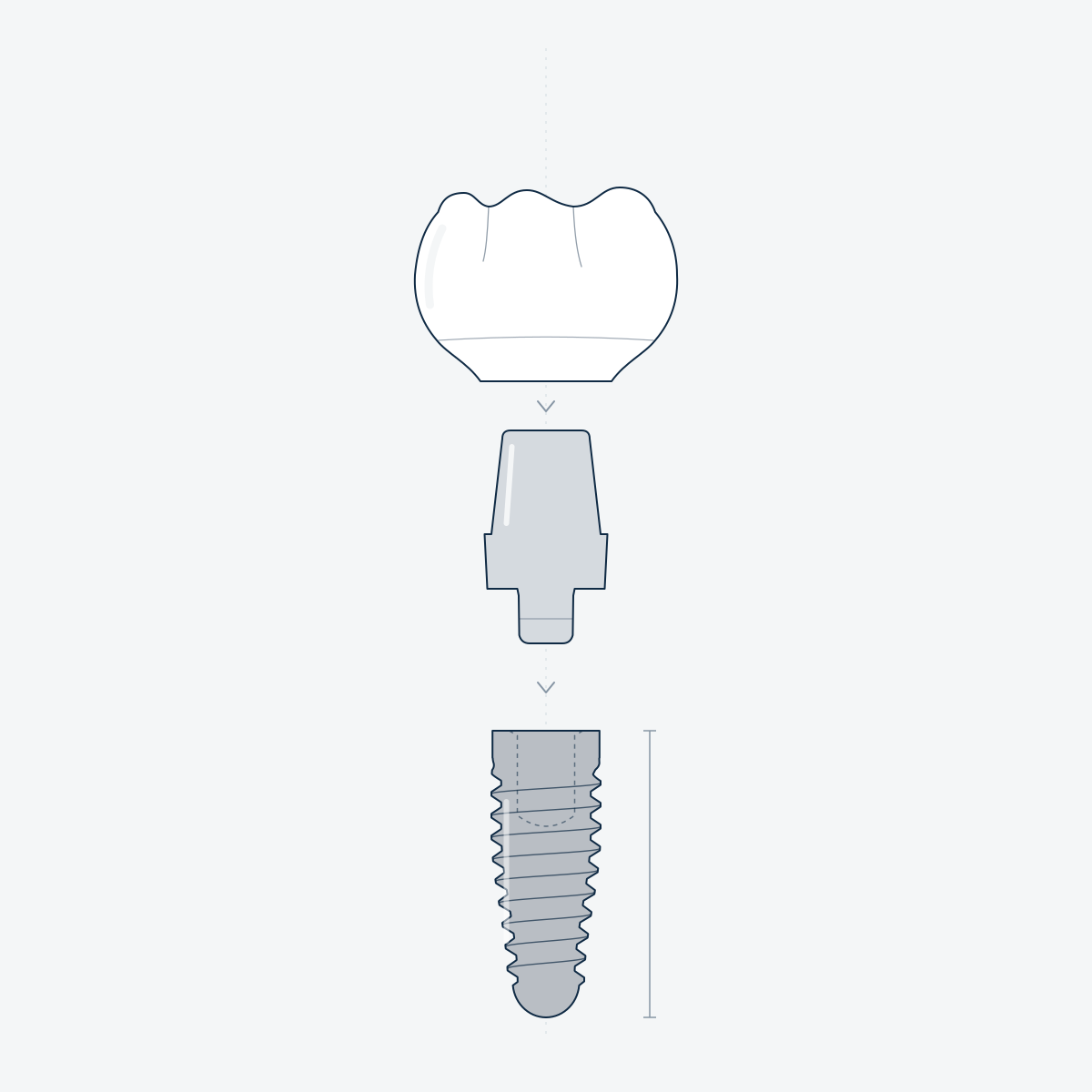
Step 1 of 4
Consultation and planning
We talk through your health and what you want, examine your mouth, and take X-rays or a 3D scan so we can see the bone.
What happens, step by step
Consultation and planning
Usually one visit
We talk through your health and what you want, examine your mouth, and take X-rays or a 3D scan so we can see the bone. We explain the options, how long each would take, and what it would cost before anything is done. You decide.
Implant placement
Usually under an hour per implant, depending on the case
Under local anaesthetic, we place the titanium implant (the fixture) in the jawbone. You are awake and should not feel pain, only pressure. Most people go home the same day. If you are having a tooth removed first, we will plan the order with you.
Healing, then the abutment
Usually around 3 to 6 months
The implant needs time to bond with the bone. This is called osseointegration and usually takes around 3 to 6 months. Once it is stable, we attach a small connector called an abutment. We will check on you during the healing time.
Crown fitted
Usually a few weeks to make and fit
We take impressions or a digital scan, and a crown (or bridge or denture) is made to match your other teeth. We fit it, check your bite, and show you how to clean around it.
Are dental implants right for you?
- You have lost a tooth, several teeth or all your teeth in one or both jaws.
- You want a fixed option rather than a removable denture, or a bridge that does not rely on the teeth next to the gap.
- You have enough healthy bone, or are willing to have bone built up first if we advise it.
- Your gums are healthy, or you are happy to treat gum disease before we start.
- You can look after your teeth daily and come to regular check-ups. Smoking and poorly controlled diabetes make implants less likely to succeed, so we will talk about both.
Options
Single tooth
One implant and one crown replace one missing tooth. The teeth on either side are not cut down, as they would be for a conventional bridge.
Several teeth (implant bridge)
Two or more implants support a bridge that replaces a few teeth in a row. You usually do not need one implant for every missing tooth.
Full arch on implants (All-on-4 style)
A full set of fixed teeth on about four to six implants in the upper or lower jaw. It suits people who have lost most or all of their teeth, or whose remaining teeth cannot be saved.
Immediate loading
In some cases, when the bone and the stability of the implant allow, we can fit temporary teeth on the day of surgery. This is not possible for everyone, and we decide it after your scan.
Bone grafting and sinus lift
If there is not enough bone, you may need a graft, or a sinus lift in the upper back jaw, before or at the time of placing the implant. We will tell you at the planning stage if you are likely to need either.
How long do dental implants take?
- Typical overall time
- Usually around 3 to 6 months from placement to final tooth. It can be shorter or longer, depending on your bone and whether grafting is needed.
- Appointments
- Usually four or more: consultation, placement, abutment and impressions, final fitting, plus check-ups.
- Anaesthesia
- Local anaesthetic for the surgery. Ask us at your consultation about other options.
- Recovery
- Most people return to normal activities within a few days. Some swelling and soreness for several days is common.
- How long it lasts
- Many implants last for decades with good care and regular check-ups, but no one can promise how long yours will last. The crown on top may need replacing sooner because of wear.
- Cost
- Depends on the number of implants, any bone work and the type of tooth fitted. We give you a written plan with costs at your consultation.
Aftercare
- Follow the written instructions we give you after surgery.
- Take any prescribed medicine as directed. Simple pain relief is enough for many people, but ask us what is right for you.
- Stick to soft, cool foods for the first few days, and avoid chewing on the implant site.
- Keep the area clean. Brush gently, and use any mouthwash we recommend.
- Do not smoke while the implant is healing. Smoking raises the risk of the implant failing.
- Clean around the implant every day, with the brushes or floss we show you, and come to your check-ups.
- Contact us if you have increasing pain, swelling that gets worse after the first few days, bleeding that will not stop, or a loose implant or crown.
Risks and limitations
- Swelling, bruising and soreness after surgery are common and usually settle within days.
- Infection around the implant can happen, early or years later. Gum disease around an implant (peri-implantitis) is the main reason implants are lost over time.
- An implant may not bond with the bone. If that happens it can usually be removed, and in many cases tried again later.
- Nerve irritation or numbness, and sinus problems in the upper jaw, are uncommon but possible.
- The crown, bridge or denture can chip or loosen and may need repair or replacement.
- Smoking, diabetes that is not well controlled, and teeth grinding can all reduce the chance of success.
- Treatment can take several months, and bone grafting adds time.
Alternatives
- A conventional bridge, which uses the teeth on either side of the gap but means cutting them down.
- A removable partial or full denture, which costs less up front but can move and may feel less stable.
- Leaving the gap. This is a valid choice for some people, although neighbouring teeth can drift over time.
Questions about dental implants
How long do dental implants last?
Many implants last for decades with good daily cleaning and regular check-ups, but nobody can promise how long yours will last. The crown on top is more likely to wear and may need replacing after some years. Gum health, smoking, teeth grinding and general health all affect how long an implant survives.
Does getting a dental implant hurt?
You should not feel pain during the procedure, because we use local anaesthetic. You may feel pressure. Afterwards, soreness and swelling for a few days are common, and most people manage this with simple pain relief. If the pain gets worse instead of better, contact us.
How long does the whole treatment take?
Usually around 3 to 6 months from placing the implant to fitting the final tooth, mostly spent waiting for it to heal. It can be quicker or slower depending on your bone, whether you need a graft, and how many teeth are being replaced. We give you a timeline after your scan.
Can I have teeth on the same day as surgery?
Sometimes. If your bone is healthy and the implants are stable enough when placed, we may fit temporary teeth on the day. It is not suitable for everyone, and the final teeth usually come after healing. We can tell you whether it is an option for you only after we have examined you and seen your scan.
Am I suitable for a dental implant?
Many adults can have implants, but it depends on your bone, gums and general health. Gum disease should be treated first. Smoking and diabetes that is not well controlled raise the risk. If you do not have enough bone, a graft may help. A consultation and scan are the only way to know.
What if I do not have enough bone?
You may still be able to have implants. Depending on where the bone is missing, we may suggest a bone graft, or a sinus lift for the upper back jaw, or a different implant plan. We will show you on your scan what is needed and what it adds to the time, and you can decide whether to go ahead.
Do you give a price before treatment starts?
Yes. After your examination and scan we explain the options and give you the cost of each in writing before anything is done. The cost depends on how many implants you need, whether you need bone work, and the type of teeth fitted, so we cannot give a fair figure without seeing you. Ask us about payment options.
Other treatments
Veneers
Thin shells of porcelain or composite that cover the front of a tooth to change its colour, shape or size.
Cosmetic dentistry
Whitening, bonding and smile planning to change how your teeth look, with a clear explanation of each option's limits.
Full mouth rehabilitation
A planned, step-by-step way to repair many teeth at once and restore how they bite together.
Talk to Dr. Vahid about dental implants
Send us a message or call. We will suggest a time for a consultation.
Address
Naji Aldakhil Medical CenterOffice 202, Block A, Al Khalafi Building, Al Mamzar, DubaiGet directions
Opening hours
- Saturday – Thursday
- 10 AM – 8 PM
- Friday
- Closed